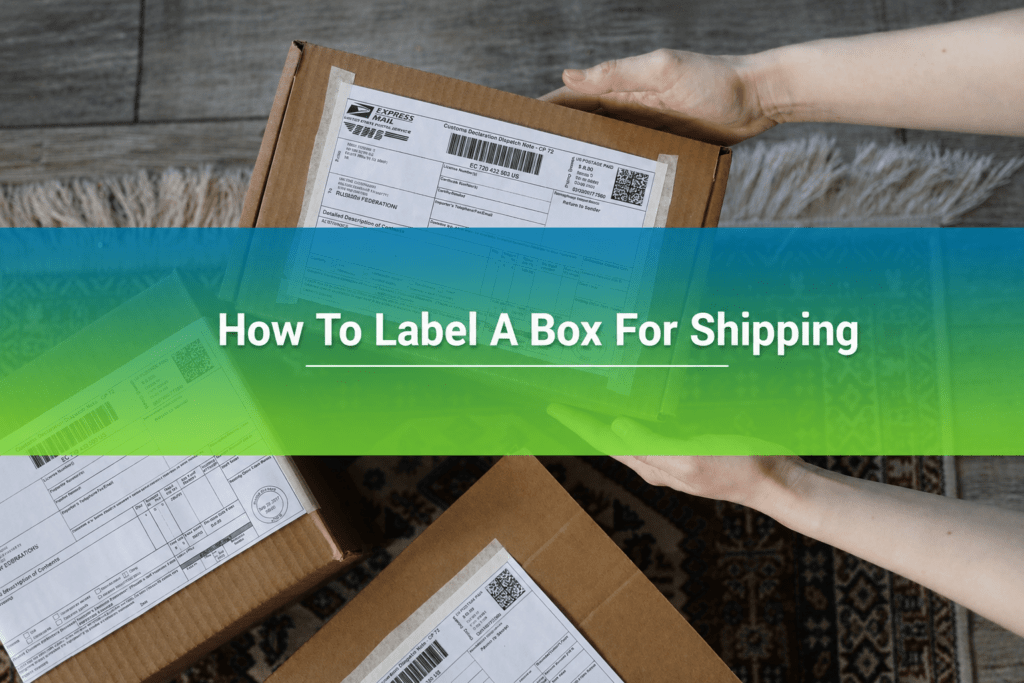
A parcel can be packed perfectly and still go missing, and mislabelling is usually the reason why. An old barcode left on a reused box, a label folded over a seam, or an address blurred by tape is enough to send a delivery to the wrong depot or straight back to your warehouse.
That mistake costs more than a stamp. You’re paying to reprint and reship the order, refunding a frustrated customer, and possibly losing them for good if the parcel never turns up at all. Multiply that across a busy sending week and a small labelling habit becomes a real cost centre.
The fix is simple once you know the steps, and it doesn’t require special equipment or software. This guide walks you through exactly how to label a box for shipping, from placement and barcode protection through to labelling for international shipments, so every parcel you send gets where it’s going the first time.
Here’s Everything You Need to Know in Under a Minute
- Place the label flat on the largest top or side surface, never over a seam, edge, or corner
- Remove or fully cover old labels and barcodes before you print and stick on a new one
- Keep the barcode uncovered and unobstructed so scanners can read it on the first pass
- Cover paper labels with clear tape for protection, but keep tape lines off the barcode itself
- Pop a duplicate address slip inside the box in case the outer label comes off in transit
- For international parcels, attach the correct customs declaration separately from the shipping label
Table of Contents
- How To Label A Box For Shipping
- What Information Needs To Go On A Shipping Label
- Choosing The Right Shipping Labels And Materials
- Labelling Special And Fragile Items
- Labelling For Domestic Vs International Shipping
- Why The Boxman Makes Shipping Label Ready Packaging Easy
- Frequently Asked Questions
- Get Your Boxes And Labels Sorted With The Boxman
How To Label A Box For Shipping
To label a box for shipping, place the printed label flat on the largest top or side surface of the box, keep the barcode fully visible and unobstructed, and make sure any old labels or barcodes are removed or covered so scanners only pick up the current one.
Getting this right takes two things: preparing the box properly before the label goes on, and checking the details once it’s stuck down. It’s the same logic Australia Post gives its own senders in its seven tips on labelling parcels, and it applies whichever courier you use. Here’s how to handle both steps.
Preparing And Placing The Label
- Clean the surface. Pick a flat, dust free side of the box before you stick anything down.
- Remove old marks. If you’re reusing a packing box, peel off or fully cross out any previous barcodes and shipping labels first.
- Position the label. Place it on the largest flat surface available, facing up and square to the edges.
- Keep it flat. Never wrap the label or barcode around a corner, edge, or box seam.
- Secure it well. Press the whole label down firmly so there are no lifted corners or loose edges.
Securing And Checking The Details
- Protect the barcode. If the label isn’t self-adhesive, cover it completely with clear packing tape, but keep the tape lines off the barcode itself so it still scans cleanly.
- Include a backup. Slip a duplicate note with the “to” and “from” address inside the box, in case the outer label tears off during handling.
- Keep extra documents separate. For international shipments, place customs forms or packing slips in their own plastic pouch rather than combining them with the main shipping label.
What Information Needs To Go On A Shipping Label
A shipping label only works if it carries the right details. Missing or unclear information is one of the fastest ways to have a parcel misrouted, even when the placement and barcode are perfect. Every label should include the following.
- Recipient details: full name, complete street address, and a contact number if your courier allows it.
- Return address: your business or home address, so an undeliverable parcel can be sent back to you.
- Barcode: the correct barcode generated by your courier or postage platform, not a leftover from a previous shipment.
- Special handling: clear wording like “Fragile” or “This Way Up” if the item needs extra care in transit.
These four elements cover what most Australian couriers expect on a standard domestic label. International shipments need extra documentation on top, which we’ll cover further down.
Accuracy matters as much as completeness. A tracking number is only useful if it’s linked to the correct parcel, so double check the barcode on the label matches the booking in your courier’s system before you send the parcel off, especially if you’ve reprinted a label after a mistake.
Choosing The Right Shipping Labels And Materials
The label itself matters almost as much as where you put it. A thin, low tack label can peel in transit, especially if the parcel gets rained on during a depot transfer or left in a hot delivery van overnight.
Look for packing tape and labels built to handle real world conditions: water resistant stock, a strong permanent adhesive, and print quality sharp enough that the barcode scans on the first attempt.
If you’re printing your own labels, set your printer to at least 300 dpi so the barcode lines stay crisp. Blurry print is one of the most common reasons a scanner rejects a label outright and sends the parcel for manual sorting.
Pairing a quality label with a sturdy shipping box also matters. A box that crushes or tears in transit can take the label with it, no matter how well it was applied in the first place.
Label size matters too. A label that’s too small for the box gets crowded by other markings and is easy to miss during handling, while an oversized label on a small parcel can end up folded over an edge just to fit. Match the label size to the box, not the other way around.
Labelling Special And Fragile Items
Standard labelling covers most parcels, but fragile, orientation sensitive, or oversized items need extra signage on top of the basics.
Fragile items need labelling on every side that could face up during handling, not just the top. Pair the label with proper internal cushioning too. A sticker alone won’t stop a knock from causing damage.
Items that must stay upright, like glassware, electronics, or anything holding liquid, need a dedicated “This Way Up” label rather than a handwritten note. Couriers are trained to look for standard, printed cues, and a “Heavy” label helps handlers brace properly for weight before they lift.
Oversized or awkward shaped items do better in packaging built for the job. A flat screen ships far more safely in a purpose sized TV box than a generic carton stuffed with padding, and it’s easier to label clearly on a flat, predictable surface. The same goes for framed pieces, where art shipping boxes keep the label on one flat, protected face instead of an awkward edge.
Labelling For Domestic Vs International Shipping
Domestic and international parcels aren’t labelled the same way. International shipments need extra documentation on top of the standard address label, and getting it wrong can hold a parcel at customs for weeks.
| Requirement | Domestic | International |
|---|---|---|
| Address format | Name, street address, suburb, state, postcode | Full address plus destination country in capitals |
| Barcode | Courier tracking barcode | Courier tracking barcode |
| Customs form | Not required | CN22 or CN23 customs declaration required |
| Item description | Optional | Must be specific, no vague terms like “gift” |
For domestic parcels, follow Australia Post’s addressing guidelines for exact formatting. Sorting equipment is trained to read address blocks in a specific order, and a line out of place can slow things down.
International parcels also need a completed customs declaration attached separately from the shipping label. Vague descriptions like “clothing” or “gift” aren’t accepted, so describe exactly what’s inside, its material, and its value. Check Australia Post’s international customs requirements before you print anything, since the form and the number of copies required depends on the destination country.
Every international parcel also needs a tariff code that identifies what the item actually is, even for gifts sent between friends or family. It’s a small extra step, but a missing or incorrect code is one of the fastest ways to have a parcel held at the border rather than moved through it.
If you regularly send parcels overseas, our guide to international shipping boxes covers the packaging side of the process in more depth, from wall strength to customs ready sizing.
Why The Boxman Makes Shipping Label Ready Packaging Easy
A label only works as well as the box it’s stuck to. The Boxman designs and supplies custom cardboard boxes built for exactly the job at hand, along with self locking mailing boxes for smaller, lighter items that need a fast pack and seal.
We’re a Western Australian owned business, and most of our stock is made locally at our Perth facility, but our customers ship parcels right across Australia, not just around Perth. Wherever you’re based, the boxes, tape, and labels are ready to order online or in store.
That range covers more than standard cartons too. Custom sizing, food safe stock, and printed handling labels like “This Way Up” and “Heavy” are all part of what we make and stock, so you’re not stuck sourcing them from separate suppliers.
Local manufacturing means faster turnaround and tighter quality control on custom sizes, which matters when a box needs to fit a label cleanly on one flat face. For bulk volume orders, importing can also work out more cost effective, and we can help source and manage that side of it too, so you’re not locked into one option regardless of order size.
We also carry recycled and renewable packing materials for businesses that want their shipping setup to match their sustainability goals, without compromising on strength. If you’re setting up packaging for an online store, our ecommerce packaging guide walks through matching box types and mailers to what you’re actually selling, label placement included.
Frequently Asked Questions
Can I Handwrite A Shipping Label Or Write Directly On The Box?
Most couriers will accept a handwritten address if it’s clear, but it’s risky. A courier’s sorting system relies on a printed barcode, and a handwritten label has none, which means your parcel gets pulled aside for manual sorting instead of moving through automatically. Writing directly on the box itself is even less reliable, since old writing from a reused box can be mistaken for the current address. If you do need to handwrite a label, use a permanent marker, write in block capitals, and stick to a proper label rather than the box surface, so it can still be removed or replaced cleanly.
Can You Just Tape A Shipping Label On A Box?
Taping a label directly onto the box is fine, and it’s actually recommended for paper labels that aren’t self-adhesive. The key is covering the whole label with clear tape without running tape lines across the barcode, since that can stop scanners reading it. Stick to proper clear packing tape rather than masking tape or duct tape, since those alternatives don’t hold up as well in transit and can lift or peel in the heat.
What Are The Most Common Shipping Label Mistakes?
The most common mistakes are placing the label over a seam or corner, leaving an old barcode visible on a reused box, and taping straight over the new barcode so it can’t be scanned. All three cause the same problem: a parcel that sorting equipment can’t read. Missing or incomplete return addresses are another frequent issue, especially on handwritten labels, since there’s no way to send an undeliverable parcel back to you without one.
Get Your Boxes And Labels Sorted With The Boxman
Getting a shipping label right comes down to a few consistent habits: a clean flat surface, an unobstructed barcode, and a backup address inside the box in case the outer one comes off.
Get the packaging right and the label has an easier job to do. Browse our guide to shipping box sizes to find the right fit for your product, or check where to buy shipping boxes if you need bulk supply sorted fast.
None of this needs to be complicated, and it doesn’t take long once it’s a habit. A clean surface, the right label stock, and a quick check of the barcode before it leaves your hands will fix most of the delivery problems businesses run into.
Get A Boxman Live Quote Today
Build your custom box, get an instant quote with 3D preview, and order with confidence from an Australia-wide packaging manufacturer, shipping nationally and internationally.